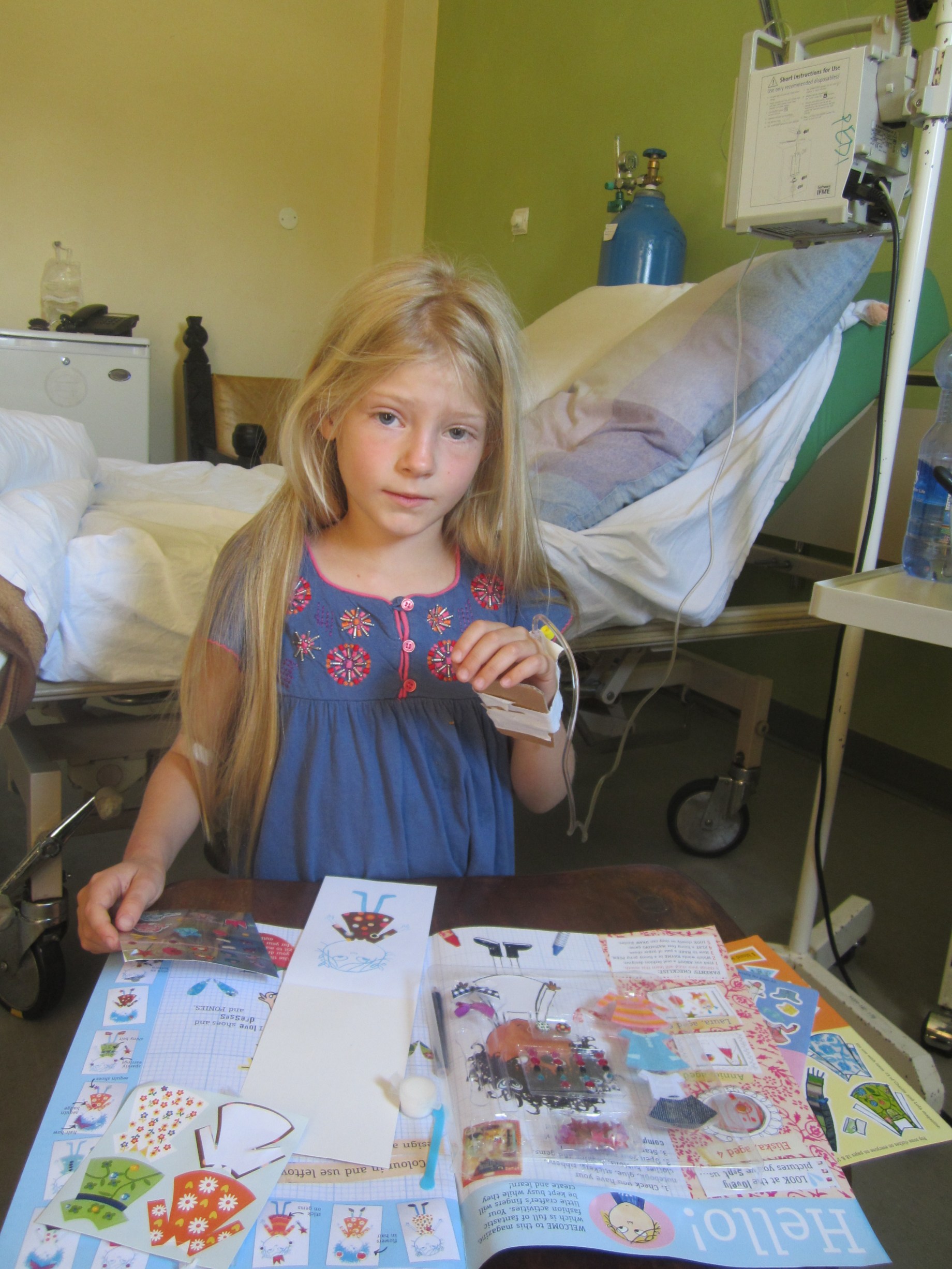
It’s now just over 10 years since our daughter Cara was diagnosed with type 1 diabetes. Back then, we were living in Addis Ababa, Ethiopia. As feeble foreigners, we were sick a lot of the time, so even though Cara had been losing weight, was always hungry and recently had become desperately thirsty and started needing to pee more often, we put it down to one of the unpleasant bacteria that we’d been hosting. One day, though, she was more tired and grouchy than usual. I took her to the doctor at the British Embassy. The moment I told her about Cara’s insatiable thirst, she suspected diabetes. I remember laughing it off as I waited for the results of the urine test. Then things took a very serious turn, and Cara was forced to do the first of, now thousands, of finger pricks.
We got the diagnosis straight away. Cara’s sugars were sky high and she was going into diabetic ketoacidosis, a very serious condition that can quickly deteriorate into a coma and even death. We drove straight to hospital. My frail little six-year-old dauhter was put on a drip filled with insulin. We knew nothing about type 1. We cried. Our Ethiopian friends cried. Our parents cried on the end of the phone. We tried to comfort Cara, who kept begging not to be injected again. I slept on the floor for the first two nights while my husband negotiated the medivac back to the UK. I asked the nurse what Cara could eat and was told, ‘Don’t worry, she can have as much cabbage as she likes’! (Many Ethiopian diabetics must massively restrict their diet since they don’t have the luxury of more modern forms of treatment). Not knowing what else to do, we fed her boiled eggs and ham and had no idea how we would ever cope with our terrifying new reality.
After about 24 hours on her drip, Cara started perking up and we cried again, this time with relief. Her little sister kept asking when she could come home but we didn’t know. On day 4, we all got on a medivac flight to London. We had not yet had to give her an injection and had no idea how to do it. The FCO arranged for us to be met at the airport by a doctor who had to inject a screaming Cara (weirdly behind a Postman Pat ride in the amusements zone, the only place we could find some privacy). We then drove with the doctor down to Exeter on the day that severe flooding hit most of the UK. My parents met us by the side of the road and collected my husband and our youngest daughter while I went on to the hospital with Cara. We only just made it only just making it before the roads were closed. Our wonderful consultant took one look at my haggard expression and found us a quiet isolation bay to sleep in. We were both utterly exhausted, but finally felt safe.
Next day, the consultant introduced us to our diabetes nurse, who, by amazing coincidence, was someone I’d been at school with. Her comforting Devonian accent and kindness made so much difference. As Cara’s sugars came down, she started to experience hypos which made her shake and go pale. We spent two weeks with my parents learning the basics before we headed back to Addis with supplies of syringes and insulin and glucose to manage on our own. That was really just the beginning of the journey.
Ten years down the line it has got easier, and diabetes sometimes even makes us laugh (her friends still enjoy shouting to her “Cara, are you high?”- it doesn’t get old). Cara is sociable and stoic and brave about her crappy condition, but it is still a mystery, a painful, limiting hassle and a never-ending worry. Our night times have never been the same. However, on her diaversary, on November 19, every year we have a feast of sushi and celebrate all the incredible doctors and nurses who have helped us get to this point, and my wonderful daughter, who puts up with so much.
My new novel, Sugar, Sugar follows 15-year-old Scarlett, as she bargains with her diabetes. Scarlett makes some dangerous choices, risking her health for a chance of stardom. Sugar, Sugar is a gripping, inspiring story about losing and finding your voice. Out soon!
 Alice Allan